

Can You Drink Tap Water in Bosnia and Herzegovina?
Tap water in Bosnia and Herzegovina varies by location. It is generally considered safe in some cities but bottled water is recommended for most visitors.
Complete Drinking Water Safety Information for Bosnia and Herzegovina
Tap water safety in Bosnia and Herzegovina varies significantly depending on where you are. The country is not an EU member state and its water quality regulations are not subject to EU enforcement mechanisms. Infrastructure quality reflects the country's complex political structure, with water management divided between entities (the Federation of Bosnia and Herzegovina and Republika Srpska) and the Brčko District, with investment levels varying considerably across the country.
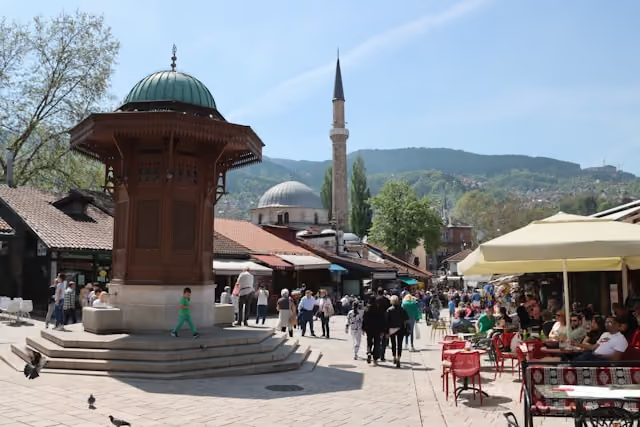
In Sarajevo, the capital and most visited city, tap water has historically been considered good quality — the city is supplied by mountain springs from the surrounding Dinaric Alps, which provide naturally clean, cold water. Many Sarajevo residents drink tap water directly and consider it among the best in the Balkans. However, older distribution infrastructure in parts of the city means quality can vary, and most visitor guidance recommends bottled water as a precaution. Hotels throughout Sarajevo typically serve bottled water.
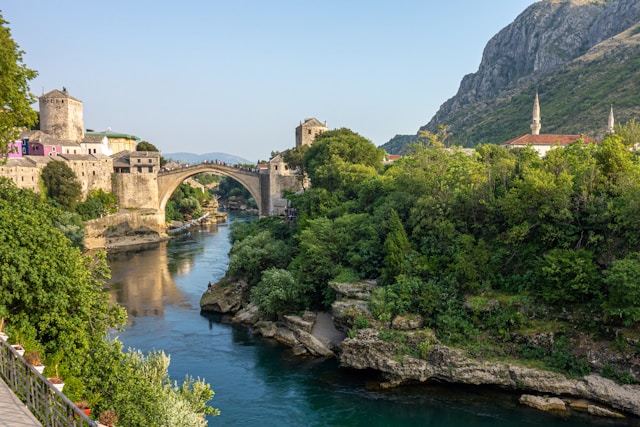
In Mostar — Bosnia's second most visited city and home to the iconic Stari Most (Old Bridge) — tap water is treated but infrastructure is older and water quality is less consistently good than in Sarajevo. Bottled water is the recommended choice in Mostar. In Banja Luka, the largest city in Republika Srpska, and in other cities across the country, water treatment exists but aging infrastructure means bottled water is the practical default for visitors.
Bosnia's natural water resources are exceptional — the country has abundant rivers, springs, and some of Europe's last wild rivers including the Una and Neretva. The quality of natural sources is high, but distribution infrastructure has not always kept pace.
Bottled Water information in Bosnia and Herzegovina

Bottled water is widely available throughout Bosnia and Herzegovina in supermarkets, shops, and hotels at affordable prices — typically BAM 0.80–2.00 (approximately €0.40–€1.00) per 1.5-litre bottle. Local Bosnian brands are available alongside imported options from neighbouring Croatia and Slovenia. Bottled water is the standard choice for most visitors throughout the country.
Is ice safe in Bosnia and Herzegovina?
Ice in hotels and tourist-oriented restaurants in Sarajevo and Mostar is generally made from filtered or commercial water and is reasonably safe. In local restaurants and smaller establishments, ice may be made from tap water. Opt for chilled bottled drinks at local venues if uncertain about ice quality.
Can you use a water filter in Bosnia and Herzegovina?
A portable filter is a useful precaution for travel in rural Bosnia, along the Una river rafting corridor, and in areas relying on small local water systems. For city visits to Sarajevo and Mostar, bottled water is the more practical option. For extended outdoor travel in Bosnia's beautiful river valleys and national parks, a quality hollow fibre filter provides reliable protection.
Should you boil tap water in Bosnia and Herzegovina?
Boiling is recommended as a precaution in Bosnia and Herzegovina, particularly outside Sarajevo. A rolling boil for one minute kills biological pathogens. Bottled water is inexpensive and widely available making boiling rarely necessary for most visitors in urban areas.
Popular destinations inBosnia and Herzegovina
Questions!
Can you drink tap water in Sarajevo?
Sarajevo's tap water comes from mountain springs and is considered good quality by local standards — many residents drink it directly. However, aging distribution pipes in parts of the city mean bottled water is the recommended choice for visitors. Most hotels serve bottled water as standard.
Is tap water safe in Mostar?
Mostar's tap water is treated but older infrastructure means quality is less consistent than in Sarajevo. Bottled water is the recommended choice throughout your visit to Mostar and the surrounding Herzegovinian region.
Is Bosnia safe to visit as a tourist?
Yes. Bosnia and Herzegovina is a safe and increasingly popular tourist destination, with Sarajevo and Mostar seeing significant growth in visitors. Standard food and water hygiene precautions apply — use bottled water throughout and be cautious with ice at local establishments.
Is water safe along the Una river rafting route?
The Una river valley in northwestern Bosnia is one of Europe's most beautiful outdoor destinations. River water should not be consumed without treatment. Bring a quality filter or purification tablets for any multi-day rafting or camping along the Una.
Does Bosnia have good local bottled water?
Yes. Bosnia's natural springs produce excellent water and several local brands are available. The country's mountainous terrain provides high-quality natural spring sources that make for good bottled water products.
We don't conduct independent water testing. We summarises and interpret publicly available official data. Conditions can change rapidly — always verify with local authorities before travelling.
Explore all popular destinations inBosnia and Herzegovina
Explore more countries in Europe
Complete tap water safety guides for European countries, covering Western Europe, Eastern Europe, Southern Europe, and Northern Europe.




.svg)
