

Should You Boil Tap Water?
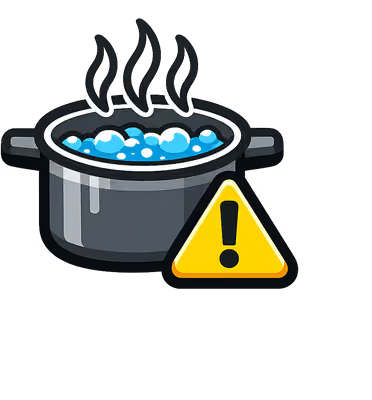
Boiling can reduce biological risks, but it is not necessary everywhere and does not address every water quality issue. Explore the four guidance categories below to understand when boiling is essential, recommended, optional or not necessary.
FAQ's

Follow the instructions from the local health authority or water provider whenever a boil-water advisory is in place. The important point is to bring the water to a vigorous rolling boil for the period specified by that guidance, then allow it to cool before use.
No. Boiling can reduce many biological risks, but it does not remove dissolved chemicals, salts or heavy metals. In some cases evaporation can make certain dissolved contaminants more concentrated, so boiling is not a solution for every water-quality problem.
Where local guidance says boiling is an appropriate treatment, cooled boiled water can generally be used for drinking, brushing teeth and food preparation. Always follow any specific local advisory, particularly if the concern involves chemicals rather than microorganisms.
No. In destinations with well-regulated tap water that is considered safe to drink, routine boiling is normally unnecessary. Boiling becomes relevant where local water quality is unreliable, a specific advisory is in place, or current guidance recommends additional treatment.
We don't conduct independent water testing. We summarise and interprets publicly available official data. Conditions can change rapidly — always verify with local authorities before travelling.
Explore Tap Water Safety by Region
Browse complete drinking water safety guides by region, with practical tap water information, health advice and traveller recommendations for destinations worldwide.