


Can You Drink Tap Water in Lisbon?
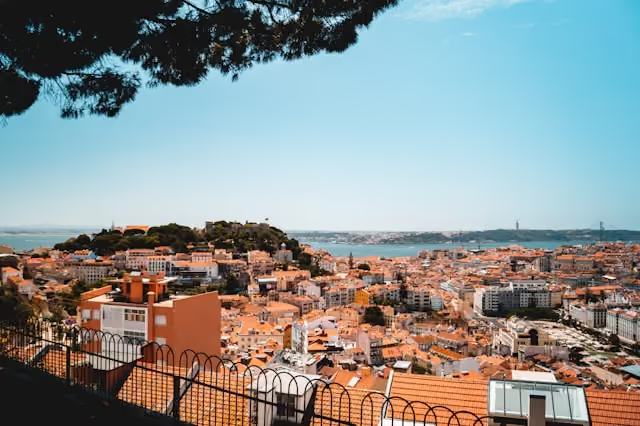
Complete Drinking Water Safety Information for Lisbon
Lisbon's tap water is safe to drink and meets EU Drinking Water Directive standards throughout the city. Water supply is managed by EPAL (Empresa Portuguesa das Águas Livres), one of Portugal's oldest utilities, which draws primarily from the Castelo de Bode reservoir in the Ribatejo region — one of the largest and cleanest reservoirs in the Iberian Peninsula — and secondarily from the Tagus River via the Alto do Seixo intake. The water undergoes conventional treatment including coagulation, sedimentation, multi-layer filtration, ozone treatment, and UV disinfection before minimal chlorination and distribution across the Greater Lisbon network.
Lisbon's tap water has a notably soft, clean profile — low in minerals and hardness compared to cities like Barcelona or Rome — which gives it a light, neutral taste that most visitors find very pleasant. This softness is a characteristic of the Castelo de Bode source, which draws from Atlantic-influenced rainfall over relatively non-calcareous terrain. The water is consistently pleasant to drink directly from any tap across Lisbon's diverse neighbourhoods including Alfama, Baixa, Bairro Alto, Belém, Chiado, Mouraria, and Príncipe Real. EPAL publishes real-time water quality monitoring data for the Lisbon network on its public website.
Portugal as a country has made a concerted effort to promote tap water consumption and reduce plastic bottle waste. In 2019, Lisbon City Council launched a programme of free public drinking water refill points in partnership with EPAL across tourist areas, parks, and transport hubs. Restaurants are legally required to offer tap water (agua da torneira) upon request under Portuguese consumer protection law, and the cultural acceptance of tap water in Lisbon has grown considerably in recent years, particularly among younger locals and the city's international community. The idea that Lisbon tap water is unsafe or of poor quality is simply not accurate.
For tourists staying in Lisbon's most visited areas — the historic tram routes of Avenida da Liberdade, the viewpoints of Alfama, the Time Out Market in Cais do Sodré, and the waterfront of Belém — free water is available from public refill fountains and from any restaurant or café upon request. Carrying a reusable bottle and refilling at these points is the most practical, sustainable, and cost-effective hydration approach for any Lisbon visit. No filtration, boiling, or bottled water is necessary from a health standpoint.
For day trips from Lisbon to Sintra, Cascais, Setubal, or the Alentejo, tap water is equally safe throughout Portugal, with the national water regulator ERSAR (Entidade Reguladora dos Serviços de Águas e Resíduos) maintaining consistent quality standards across the country. Portugal has one of the highest tap water quality compliance rates in the EU. Visitors can drink confidently from any tap throughout their time in Lisbon and beyond.
Bottled Water Information
Bottled water is widely available across Lisbon but unnecessary for health reasons. Luso is Portugal's most iconic still mineral water brand, sourced from natural springs in the Beira Litoral region — the brand dates to 1852 and is a national institution. Água das Pedras is the leading Portuguese sparkling mineral water, widely available at restaurants and cafes. Fastio and Carvalhelhos are other popular still brands. A 1.5-litre bottle costs approximately €0.40–€1.20 at Pingo Doce, Continente, or Lidl supermarkets. The only practical reasons to buy bottled water in Lisbon are personal mineral preference or the desire for a portable sealed container — the tap water is completely safe and free.
Is Ice Safe in Lisbon?
Ice in Lisbon is completely safe at all establishments. EPAL's soft, clean municipal supply — free from biological contamination and compliant with EU Drinking Water Directive standards — means there is no meaningful ice safety concern anywhere in the city. From pastelarias in Belém to rooftop bars in Bairro Alto and beach clubs at Costa da Caparica, ice quality is not a consideration for any visitor to Lisbon.
Should You Use a Water Filter in Lisbon?
A water filter is completely unnecessary in Lisbon. EPAL's supply consistently meets and exceeds EU Drinking Water Directive standards, and the water is notably soft, neutral in taste, and free from the mineral heaviness or chlorine character that makes filtration appealing in other European cities. Carry a reusable bottle and refill at EPAL's public drinking fountains located throughout tourist areas, parks, and transport hubs across Lisbon — it is free, safe, and the most sustainable hydration approach for any visit.
Should You Boil Tap Water in Lisbon?
Boiling Lisbon's tap water is entirely unnecessary. EPAL's supply meets strict EU Drinking Water Directive standards with no biological safety concerns, and the distribution network across Lisbon's neighbourhoods is modern and well-maintained. There is no scenario in which boiling adds value for a Lisbon visitor — the water is safe, soft, and pleasant straight from the tap throughout the city.
Questions!
Is tap water safe to drink in Lisbon?
Yes, completely. Lisbon's tap water is managed by EPAL and sourced primarily from the Castelo de Bode reservoir in Ribatejo. It meets EU Drinking Water Directive standards and is one of the softest, most pleasant-tasting municipal supplies in Europe. No bottled water is needed for health reasons during your visit.
Why do some Lisbon restaurants serve bottled water instead of tap water?
Restaurants in Lisbon often present bottled still or sparkling water as a default table item — a commercial norm rather than a sign of tap water being unsafe. Under Portuguese consumer law you can request agua da torneira (tap water) at any restaurant. It is safe, free, and excellent quality.
Is ice safe in Lisbon?
Yes, completely. Lisbon's tap water supply is free from biological contamination and meets EU safety standards. Ice at every establishment across the city — from Time Out Market vendors to rooftop bars in Bairro Alto — is completely safe.
What is the best bottled water brand in Lisbon?
Luso is Portugal's most iconic still mineral water, sourced from springs in Beira Litoral and available everywhere. Água das Pedras is the leading sparkling option. Both are available at Pingo Doce, Continente, and Lidl for approximately €0.40–€1.20 per 1.5 litres. Neither is necessary for safety — the tap water is excellent.
Do I need a water filter in Lisbon?
No. Lisbon's tap water meets EU Drinking Water Directive standards and is safe to drink directly. It is notably soft and clean-tasting — many visitors find it more pleasant than the tap water in their home countries. Bring a reusable bottle and use Lisbon's free public refill points throughout your visit.
We don't conduct independent water testing. We summarise and interpret publicly available official data. Conditions can change rapidly — always verify with local authorities before travelling.
📚 Official Resources & Further Reading
World Health Organization (WHO) – Drinking Water Safety Guidelines
Centers for Disease Control and Prevention (CDC) – Portugal Travel Health Advice
Australian Government – Smartraveller Portugal

.svg)
