

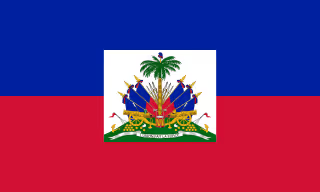
Can You Drink Tap Water in Haiti?
Tap water in Haiti is not safe to drink. Infrastructure is severely damaged by earthquakes and political instability. Bottled water is essential throughout.
Complete Drinking Water Safety Information for Haiti
Tap water in Haiti is not safe to drink for visitors. Haiti has some of the least developed water infrastructure in the Western Hemisphere. Decades of political instability, the catastrophic 2010 earthquake that killed over 200,000 people, Hurricane Matthew in 2016, and the 2021 earthquake have repeatedly set back reconstruction efforts. Even in Port-au-Prince, there is essentially no reliable treated municipal water supply.
Port-au-Prince, the capital and largest city, relies heavily on private water vendors, trucked water, and bottled water as the primary sources of drinking water for residents and visitors alike. The city's formal water utility DINEPA has extremely limited capacity. Hotels and established businesses provide bottled water for guests. Bottled water is available in supermarkets and shops in areas accessible to visitors.
Haiti experienced a catastrophic cholera outbreak following the 2010 earthquake that killed over 10,000 people and infected hundreds of thousands — one of the worst cholera outbreaks in modern history. While cholera transmission has significantly declined since its peak, the risk of waterborne disease remains very real throughout the country given the state of water infrastructure.
Beyond Port-au-Prince, water infrastructure is essentially non-existent in most of the country. Cap-Haïtien in the north, Jacmel on the south coast, and other towns rely on boreholes, springs, and water vendors. Haiti's ongoing security crisis as of 2024 — with gang control over large parts of Port-au-Prince and significant parts of the country — has further complicated water access and infrastructure maintenance.
Use sealed bottled water throughout Haiti for all drinking and brushing teeth. A quality portable filter is essential for any extended stay or travel outside Port-au-Prince. Haiti's water situation reflects the country's broader humanitarian crisis — treat all water sources as potentially contaminated.
Bottled Water in Haiti

Bottled water is available in Port-au-Prince and larger towns when supply chains are functioning, though availability can be inconsistent given ongoing instability. Common local brands include Culligan and Coolligan. Always check seals before purchasing. In rural areas and conflict-affected zones, bottled water availability is very limited.
Is ice safe in Haiti?
Ice should be avoided throughout Haiti unless you are certain it was made from purified or bottled water. In established hotels catering to NGO and diplomatic visitors, ice is generally safe. In local restaurants, street food settings, and anywhere outside vetted establishments, avoid ice entirely.
Can you use a water filter in Haiti?
A portable filter rated for bacteria and protozoa is strongly recommended for any extended stay in Haiti. Given the country's cholera history and current water infrastructure crisis, a filter combined with chemical purification tablets provides important backup protection. Bottled water remains the primary recommended source throughout.
Should you boil tap water in Haiti?
Yes, boiling is essential if bottled water is unavailable. Bring water to a rolling boil for at least one minute. Bottled water is available in Port-au-Prince and established towns. In rural areas and conflict-affected zones, a quality filter and purification tablets are non-negotiable backup.
Popular destinations inHaiti
Questions!
Is tap water safe to drink in Haiti?
No. Tap water in Haiti is not safe to drink. The country has essentially no reliable municipal water treatment. Bottled water is essential throughout the country.
Can I drink tap water in Port-au-Prince?
No. Port-au-Prince has no reliable treated water supply. Residents and visitors rely on bottled water and private vendors. Hotels provide safe water for guests as standard.
Does Haiti still have cholera?
Haiti experienced one of the worst cholera outbreaks in modern history after the 2010 earthquake. Transmission has declined significantly but the risk of waterborne disease remains real given the state of water infrastructure. Use only sealed bottled water throughout the country.
Is it safe to travel to Haiti?
Most governments advise against travel to Haiti due to ongoing gang violence and political instability. Any visit requires working with experienced security operators. Water planning is one component of comprehensive security logistics for any trip.
What is the safest approach to water in Haiti?
Use sealed bottled water exclusively throughout the country. Carry a portable filter and purification tablets as essential backup. Avoid ice outside vetted hotels. Haiti's water situation is part of a broader humanitarian crisis requiring comprehensive precautions.
We don't conduct independent water testing. We summarises and interpret publicly available official data. Conditions can change rapidly — always verify with local authorities before travelling.
Explore all popular destinations inHaiti
Explore more countries in Caribbean
Complete tap water safety guides for Caribbean islands including Jamaica, Bahamas, Dominican Republic, Barbados, Aruba, Trinidad and Tobago, and all major island destinations.


📚 Official Resources & Further Reading
World Health Organization – Haiti
CDC – Haiti Travel Health Advisory
U.S. Department of State – Haiti Travel Advisory

.svg)
