


Can You Drink Tap Water in Hanoi?
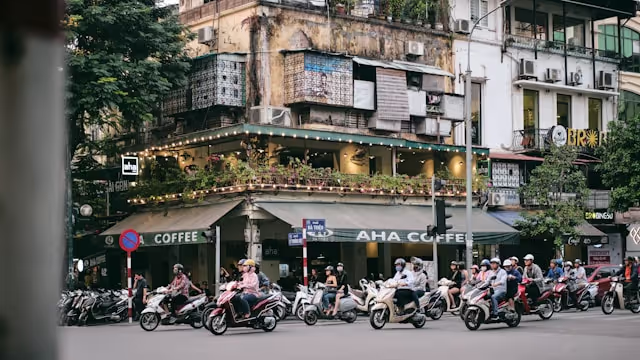
Complete Drinking Water Safety Information for Hanoi
Tap water in Hanoi is not safe to drink and this applies throughout the entire city — the Old Quarter (Hoàn Kiếm), the Hoan Kiem Lake area, Ba Đình, Tây Hồ (West Lake), Đống Đa, and the outer districts. Water supply in Hanoi is managed by Hanoi Water Limited Company (HAWACO) and its subsidiary companies, drawing from two primary surface water sources: the Red River (Sông Hồng) and the Da River (Sông Đà). Major treatment plants at Yên Phụ, Lương Yên, Bắc Thăng Long-Vĩnh Ngọc, and Gia Lâm apply conventional treatment including coagulation, sedimentation, sand filtration, and chlorination, and the water meets Vietnamese national drinking water standards at the point of leaving the plant. The distribution system is the critical failure point.
Hanoi's pipe network is one of the oldest in Southeast Asia — much of the central distribution infrastructure dates from the French colonial period of the late 19th and early 20th century, with significant sections of cast iron and asbestos cement pipe that have never been replaced. These aging pipes introduce rust, sediment, heavy metals, and bacterial regrowth between the treatment plant and the tap. In the Old Quarter's dense warren of streets around Hoàn Kiếm Lake — Hàng Bông, Hàng Gai, Hàng Bạc, and Ta Hiện streets — as well as in Ba Đình's government district and the older residential lanes (ngõ and ngách) throughout Đống Đa, pipe conditions are highly variable and the water quality at the tap can differ dramatically from the treated source.
The Red River — HAWACO's primary source — carries a substantial pollution load from agricultural, industrial, and domestic sources upstream in northern Vietnam and southern China. Seasonal variation in the Red River is extreme: during the monsoon season (May–September), the river runs with heavy sediment loads and elevated pollutant concentrations from surface runoff across the entire catchment, placing intense pressure on Hanoi's treatment capacity. During dry season (October–April), reduced river flows concentrate pollutants further. Neither seasonal condition produces tap water that is safe for direct consumption at the tap, and Hanoi residents across all socioeconomic levels use boiled water, 19-litre dispenser deliveries, or sealed bottled water as their exclusive drinking water source.
Visitors staying in Hanoi's most popular areas — the Old Quarter streets around Hàng Bông and Ta Hiện (Beer Street), the Hoan Kiem lakeside, the French Quarter around Hoan Kiem, the boutique hotel corridor in Tây Hồ (West Lake), and the backpacker hub of Mã Mây Street — will find sealed bottled water provided at all hotels, guesthouses, and restaurants as the universal standard. No Hanoi accommodation of any category presents tap water as a drinking option. Bottled water coolers are standard in hotel lobbies, and sealed bottles are provided in all guest rooms throughout the city.
For day trips from Hanoi to Ha Long Bay, Ninh Binh, Sa Pa, or the northern highlands, the same water safety approach applies throughout northern Vietnam. Sealed bottled water should be the exclusive drinking source at all stops, and carrying sufficient supply for any multi-hour journey or boat trip is important. La Vie, Aquafina, and Vital are available at Circle K, GS25, and convenience stores throughout Hanoi's tourist areas and at filling stations along major highway routes.
Bottled Water Information
Bottled water is universally available throughout Hanoi at extremely low cost. La Vie, produced by Nestlé Vietnam from Da Lat mountain springs, is the premium Vietnamese brand available at every convenience store and supermarket citywide. Aquafina (PepsiCo Vietnam), Dasani (Coca-Cola Vietnam), and Vital are also widely available. A 500ml bottle costs approximately VND 5,000–10,000 (around AUD $0.30–$0.60) at Circle K, GS25, and VinMart convenience stores throughout the Old Quarter, Tay Ho, and Ba Dinh districts. Large-format 19-litre dispenser deliveries are standard in Hanoi homes and offices and are the most economical solution for apartment stays.
Is Ice Safe in Hanoi?
Ice safety in Hanoi requires consistent awareness. Established hotels, restaurants, and international-standard cafes throughout the Old Quarter, Tây Hồ, and the French Quarter use commercially produced tubular ice from regulated purified-water factories — identifiable by its hollow cylindrical shape — and this ice is safe. Street food stalls, bú chả and bún riêu vendors, and informal restaurants in the Old Quarter's narrow lanes may use lower-grade ice of uncertain origin. The practical rule is consistent with wider Vietnam: established tourist-facing venues — safe; street stalls and informal vendors — caution advised.
Should You Use a Water Filter in Hanoi?
A portable water filter is a worthwhile addition for travellers spending extended time in Hanoi or continuing to more remote areas of northern Vietnam where bottled water availability may be limited. Filter bottles such as the GRAYL UltraPress or LifeStraw Peak are effective against the biological contamination profile of Hanoi's tap water and address the heavy metal and sediment concerns introduced by the city's aging pipe network better than boiling alone. For standard hotel stays in the Old Quarter or Tay Ho, sealed bottled water remains the most convenient and reliable solution.
Should You Boil Tap Water in Hanoi?
Boiling Hanoi tap water at a rolling boil for one minute kills biological contaminants but does not remove heavy metals, chemical residues, or sediment introduced by aging pipes — an issue particularly relevant in Hanoi's oldest central neighbourhoods. Boiling is a useful emergency measure but not a substitute for sealed bottled water, which is universally available across the city at very low cost.
Questions!
Is tap water safe to drink in Hanoi?
No. Tap water in Hanoi is not safe to drink. Despite treatment by HAWACO from the Red River and Da River sources, Hanoi's colonial-era pipe infrastructure introduces contamination between plant and tap. No resident or visitor drinks tap water directly — use only sealed bottled water for all drinking and tooth brushing throughout your stay.
Is ice safe in Hanoi restaurants and cafes?
At established hotels, restaurants, and cafes throughout the Old Quarter, Tay Ho, and the French Quarter, ice is generally safe — these venues use commercially produced tubular ice made from purified water. At street food stalls and informal vendors, ice quality is less certain. The hollow cylindrical shape of commercial tubular ice is the reliable indicator of a purified-water source in Vietnam.
What is the best bottled water brand in Hanoi?
La Vie, produced by Nestlé Vietnam, is the premium Vietnamese still water brand and the most widely available. Aquafina and Dasani are also reliable options. A 500ml bottle costs approximately VND 5,000–10,000 at Circle K, GS25, and VinMart stores throughout the city's tourist areas.
Is the water safe at hotels in Hanoi?
No hotel in Hanoi presents tap water as a drinking option. All accommodation — from budget guesthouses on Mã Mây Street to five-star properties around Hoan Kiem Lake — provides sealed bottled water for guests. Use the provided bottles and do not drink from room taps under any circumstances.
Is water safe on day trips from Hanoi to Ha Long Bay?
No. Water safety concerns apply throughout northern Vietnam. On Ha Long Bay cruises, rely on the sealed bottled water provided by your cruise operator. On Ninh Binh and Sa Pa day trips, purchase sealed bottles at convenience stores before departure and carry sufficient supply throughout the journey.
We don't conduct independent water testing. We summarise and interpret publicly available official data. Conditions can change rapidly — always verify with local authorities before travelling.
Explore more destinationsVietnam
📚 Official Resources & Further Reading
World Health Organization (WHO) – Drinking Water Safety Guidelines
Centers for Disease Control and Prevention (CDC) – Vietnam Travel Health Advice
Australian Government – Smartraveller Vietnam

.svg)
