


Can You Drink Tap Water in Nairobi?
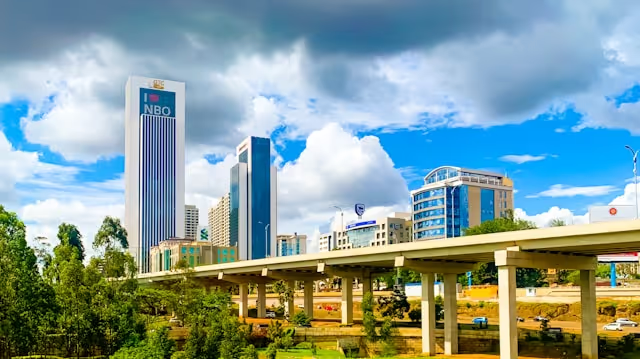
Complete Drinking Water Safety Information for Nairobi
Tap water in Nairobi is not safe to drink and this applies throughout the entire city — the CBD, Westlands, Karen, Kilimani, Lavington, Parklands, Langata, South B, South C, and the outer suburbs. Water supply is managed by the Nairobi City Water and Sewerage Company (NCWSC), which draws from the Ndakaini Dam on the Thika River (the primary source, supplying approximately 80% of Nairobi’s water), supplemented by the Ruiru Dam, Sasumua Dam on the Sasumua River in the Aberdare Ranges, and the Kikuyu Springs. Water is treated at the Gigiri and Kabete water treatment works and at the Thika Road plant using conventional coagulation, sedimentation, filtration, and chlorination processes. The treated water meets Kenyan national drinking water standards at the point of leaving the treatment facilities.
The distribution infrastructure is the critical failure point for Nairobi’s water supply. The city has experienced explosive population growth — from under 500,000 in 1970 to an estimated 5 million in the greater metropolitan area today — that has dramatically outpaced water infrastructure investment. NCWSC estimates that over 30% of treated water is lost to leakage in the distribution network before it reaches any consumer tap, and the aging pipe network in many of Nairobi’s established residential areas — including parts of Karen, Langata, Westlands, and the older CBD infrastructure — introduces rust, sediment, and bacterial regrowth between the treatment plant and the tap. Intermittent water supply is also a systemic issue throughout the city; many areas receive piped water only a few hours per day or on designated days of the week, and rooftop storage tanks used to bridge supply gaps introduce further quality uncertainty during storage.
The practical result is that virtually no Nairobi resident drinks tap water directly. Boiling before consumption is standard practice across all socioeconomic levels of Nairobi society for those who use tap water, with bottled water the preferred alternative for those who can access it. In the upscale residential areas of Karen, Muthaiga, Lavington, and Runda — where much of Nairobi’s expatriate community and luxury safari circuit accommodation is based — all properties use large-format dispenser deliveries or installed point-of-use reverse osmosis systems. No hotel, guesthouse, restaurant, or safari operator in Nairobi presents tap water as a drinking option.
Nairobi is Kenya’s gateway city for safari travel to the Maasai Mara, Amboseli, Tsavo, and the wider national park circuit, and many visitors spend one or two nights in the city before or after their safari itinerary. The city’s most visited areas — the Nairobi National Museum, Giraffe Centre in Langata, David Sheldrick Wildlife Trust, Karen Blixen Museum in Karen, and the Nairobi National Park — are all in neighbourhoods with the same NCWSC supply. Sealed bottled water is available at all of these sites and at every supermarket and petrol station throughout the tourism corridor.
For onward travel from Nairobi to the Maasai Mara (by road via Narok or by light aircraft from Wilson Airport), Amboseli, or the Kenyan coast including Mombasa, Diani Beach, and Watamu, the same water safety approach applies throughout Kenya. On safari, all reputable camps and lodges provide sealed bottled water or filtered water for guests. At coastal beach resorts in Diani and Malindi, bottled water is the universal standard. Keringet and Dasani are available throughout Kenya’s tourist circuit, and stocking up at a Nairobi Carrefour or Naivas before any safari departure is practical and economical.
Bottled Water Information
Bottled water is widely available throughout Nairobi at all supermarkets, petrol stations, and corner shops. Keringet, produced by Coca-Cola Kenya from natural springs in the Rift Valley, is Kenya's most popular and widely available still water brand. Aquamist and BonAqua (Coca-Cola Kenya) are also widely available, alongside Dasani. A 500ml bottle of Keringet costs approximately KES 50–80 (around AUD $0.50–$0.80) at Naivas, Carrefour, QuickMart, and petrol station shops throughout Westlands, Karen, Kilimani, and the CBD. Large-format 20-litre dispenser deliveries are standard in Nairobi homes and offices and are the most economical solution for apartment or longer stays.
Is Ice Safe in Nairobi?
Ice safety in Nairobi requires consistent awareness. At established hotels, upscale restaurants, and international-standard venues in Karen, Westlands, Kilimani, and along the Ngong Road corridor, ice is generally produced from purified or filtered water and is safe. At local Kenyan restaurants, nyama choma spots, and informal eateries throughout the CBD and outlying areas, ice quality is less certain. The practical guideline: established tourist and expat-facing venues — safe; local informal establishments — request without ice.
Should You Use a Water Filter in Nairobi?
A water filter is a practical addition for longer Nairobi stays, particularly for visitors in self-catering apartments or Airbnb properties in Westlands, Kilimani, or Lavington where bottled water costs accumulate. Activated carbon countertop filters or point-of-use reverse osmosis systems are widely used by Nairobi’s large expatriate community and are available from Carrefour and hardware stores throughout the city. For standard hotel stays or short visits, sealed bottled water is the most convenient and reliable solution. A portable filter bottle such as the GRAYL UltraPress is also useful for onward travel to safari camps or coastal destinations where bottled water supply may be less consistent.
Should You Boil Tap Water in Nairobi?
Boiling Nairobi tap water at a rolling boil for one minute kills biological contaminants and is a widely practised safety measure among Nairobi residents who cannot access or afford bottled water daily. However, boiling does not remove chemical residues, heavy metals, or the turbidity introduced by aging pipes. For visitors, sealed bottled water is more practical and universally available throughout Nairobi at very low cost.
Questions!
Is tap water safe to drink in Nairobi?
No. Tap water in Nairobi is not safe to drink. Despite treatment by NCWSC from the Ndakaini Dam and Thika River, aging infrastructure, distribution losses, and intermittent supply mean the water is not suitable for direct consumption. No resident or visitor drinks tap water directly — use only sealed bottled water for all drinking and tooth brushing throughout your stay.
Why is Nairobi tap water not safe despite being treated?
Over 30% of Nairobi’s treated water is lost to leakage in the aging distribution network before reaching any tap. The pipes introduce rust, sediment, and bacterial regrowth. Intermittent supply means rooftop storage tanks are standard, adding further quality uncertainty. The treatment is sound — the distribution system is the problem.
Is ice safe in Nairobi restaurants and hotels?
At established hotels, upscale restaurants, and tourist-facing venues throughout Karen, Westlands, and the Nairobi safari circuit accommodation corridor, ice is generally produced from filtered or purified water and is safe. At local restaurants, street food vendors, and informal establishments, ice quality is less certain. Request drinks without ice when you cannot confirm the source.
What is the best bottled water brand in Nairobi?
Keringet, produced by Coca-Cola Kenya from Rift Valley springs, is Kenya’s most popular and trusted still water brand. Aquamist and Dasani are also reliable options. A 500ml bottle costs approximately KES 50–80 at Naivas, Carrefour, and QuickMart supermarkets throughout the city.
Is water safe on safari from Nairobi?
Yes — at all reputable safari camps and lodges. All established camps in the Maasai Mara, Amboseli, and Tsavo provide sealed bottled or filtered water for guests as standard. Never drink from any natural water source on safari regardless of appearance. Stock up on sealed bottled water in Nairobi before any bush departure.
We don't conduct independent water testing. We summarise and interpret publicly available official data. Conditions can change rapidly — always verify with local authorities before travelling.
📚 Official Resources & Further Reading
World Health Organization (WHO) – Drinking Water Safety Guidelines
Centers for Disease Control and Prevention (CDC) – Kenya Travel Health Advice
Australian Government – Smartraveller Kenya

.svg)
