

Can You Drink Tap Water in Antigua Guatemala?
Complete Drinking Water Safety Information for Antigua Guatemala
Tap water in Antigua Guatemala is not safe to drink, despite the city's status as a UNESCO World Heritage Site and its well-developed international tourism infrastructure. Water supply in Antigua is managed by EMPAGUA (Empresa Municipal de Agua de la Ciudad de Guatemala) and local municipal water services, drawing from the volcanic aquifer systems beneath the Panchoy Valley where Antigua sits at 1,500 metres above sea level, surrounded by the Agua, Fuego, and Acatenango volcanoes. While the water is treated before distribution, Guatemala's overall water treatment capacity and distribution infrastructure does not produce water that meets international drinking water standards at the point of tap delivery, and this applies equally to Antigua despite its relative prosperity and tourism development.
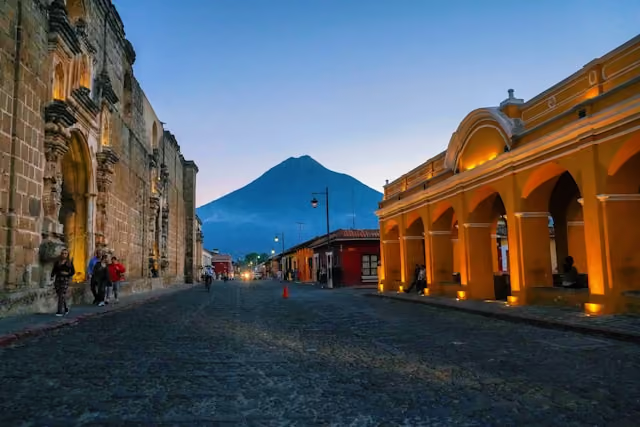
Antigua's water supply situation is complicated by the city's colonial heritage. Much of Antigua's charm lies in its remarkably well-preserved Spanish colonial architecture dating from the 16th to 18th centuries — but the same preservation ethos means significant sections of the water distribution network are old, often running through or beneath historic colonial structures and cobblestone streets that make pipe replacement or upgrading complex. Intermittent water supply is common throughout the city, with many neighbourhoods and hotels receiving water on a scheduled basis and storing it in tinaco rooftop tanks or underground cisterns. By the time water reaches any tap in Antigua, it has typically passed through storage conditions that introduce further quality variability beyond the original treatment limitations.
The practical result is that all Antigua residents — from the local Guatemalan population to the substantial expat community of language school teachers, NGO workers, and long-term travellers that Antigua attracts — use either sealed bottled water, agua purificada from local refill stations, or installed home filtration systems for all drinking water. No hotel, hostel, café, or restaurant in Antigua presents tap water as a drinking option. Antigua's thriving tourism infrastructure — with hundreds of restaurants, rooftop bars, cafés, and guesthouses concentrated around the Parque Central, along 5a Avenida Norte, and throughout the historic centre — all use purified water for ice, coffee, and all beverages. The water used in Antigua's renowned café culture, a highlight for many visitors, is always purified — the tap is not the source.
For visitors exploring Antigua's major sites — the Arco de Santa Catalina, the ruins of La Merced, Cerro de la Cruz viewpoint, the Jade Museum, the Central Market, and the cobblestone streets of the historic centre — carrying sealed bottled water throughout the day is essential. Antigua's altitude and dry season (November–April) climate — with clear, sunny days at 1,500 metres that produce significant dehydration despite moderate temperatures — make adequate hydration from safe sources genuinely important. During the rainy season (May–October), while temperatures are similar, the heavy afternoon rains can temporarily affect water pressure and supply throughout the city.
For day trips from Antigua to the Pacaya Volcano, Lake Atitlán and its surrounding indigenous villages, Chichén Itzá ruins, or Chichicastenango market, the same water safety approach applies throughout Guatemala. At Lake Atitlán — one of the most visually spectacular lakes in the world — tap water is equally unsafe in the lakeside villages of Panajachel, San Pedro La Laguna, San Juan La Laguna, and Santiago Atitlán. Carry sufficient sealed bottled water for all day excursions from Antigua, as commercial supply becomes less consistent away from the city centre.
Bottled Water Information
Bottled water is widely available throughout Antigua at every supermarket, tienda, and tourist shop in and around the Parque Central. Salvavidas, Guatemala's most widely available domestic still water brand, is stocked at every Paiz and La Torre supermarket and at minisupers throughout the city. Pure Life (Nestle Guatemala) and Cristal are also widely available. A 1.5-litre bottle of Salvavidas costs approximately GTQ 8–15 (around AUD $1.40–$2.60) at supermarkets, rising at tourist-area cafés and restaurants around the Parque Central and Arco de Santa Catalina. Water refill purification stations (agua purificada dispensers) are found throughout Antigua and provide large-format purified water for local households and longer-stay visitors at very low cost.
Is Ice Safe in Antigua Guatemala?
Ice safety in Antigua Guatemala requires consistent awareness. At established tourist restaurants, rooftop bars, craft beer venues, and cafés throughout the historic centre around the Parque Central, 5a Avenida Norte, and the Arco de Santa Catalina corridor, ice is produced from purified water and is safe. At local Guatemalan comedores, market food stalls, and informal street food vendors throughout Antigua and its surrounding neighbourhoods, ice quality is less certain and should be avoided unless you can confirm purified-water production. Request sin hielo (without ice) at any informal venue.
Should You Use a Water Filter in Antigua Guatemala?
A portable water filter is a worthwhile addition for any Antigua Guatemala visit, particularly for longer stays or visitors continuing to more remote areas of Guatemala where bottled water supply becomes less consistent. The GRAYL UltraPress and LifeStraw Peak are effective against the biological contamination profile of Guatemalan tap and well water. For standard hotel stays in Antigua's historic centre, sealed bottled water and the city's agua purificada refill station network are the most convenient solutions. Agua purificada dispensers — found throughout Antigua's neighbourhoods — provide large-format purified water at a fraction of sealed bottle prices and are the most economical option for longer stays.
Should You Boil Tap Water in Antigua Guatemala?
Boiling Antigua Guatemala tap water at a rolling boil for one minute kills biological contaminants and is practised by many local residents as a daily measure. However, boiling does not remove chemical residues or the mineral content introduced by the city's volcanic aquifer sources and aging colonial-era pipes. For visitors, sealed bottled water is more practical and is universally available throughout Antigua at very low cost.
Questions!
Is tap water safe to drink in Antigua Guatemala?
No. Tap water in Antigua Guatemala is not safe to drink despite the city's well-developed tourism infrastructure and UNESCO World Heritage status. Colonial-era pipe sections, scheduled intermittent supply, and rooftop tank storage mean the water is not suitable for direct consumption. Use only sealed bottled water or agua purificada for all drinking and tooth brushing throughout your stay.
Is the coffee and food in Antigua safe if tap water is unsafe?
Yes. All of Antigua's restaurants, cafés, and food establishments use purified water for coffee, cooking, ice, and all beverages — not tap water. Antigua's renowned café scene and restaurant culture are completely safe. The tap water unsafe warning applies to what comes from the tap in your accommodation, not to food and drinks prepared at established venues.
Is ice safe in Antigua restaurants and cafés?
At established restaurants, rooftop bars, and tourist-facing cafés throughout Antigua's historic centre, ice is produced from purified water and is safe. At local market stalls and very informal local comedores, ice quality is less certain. Request sin hielo (without ice) at any informal local venue where you cannot confirm the source.
What is the best bottled water brand in Antigua Guatemala?
Salvavidas is Guatemala's most widely available domestic still water brand, found at every supermarket and tienda throughout the city. Pure Life (Nestle Guatemala) and Cristal are also reliable. A 1.5-litre bottle costs approximately GTQ 8–15 at supermarkets — significantly cheaper than buying at tourist restaurants near the Parque Central.
Is water safe at Lake Atitlán on a day trip from Antigua?
No. Tap water is equally unsafe throughout the Lake Atitlán basin, including the popular villages of Panajachel, San Pedro La Laguna, and San Juan La Laguna. Carry sufficient sealed bottled water for any Lake Atitlán day trip from Antigua, as commercial supply in smaller villages can be less consistent.
We don't conduct independent water testing. We summarise and interpret publicly available official data. Conditions can change rapidly — always verify with local authorities before travelling.
Explore more destinationsGuatemala
📚 Official Resources & Further Reading
World Health Organization (WHO) – Drinking Water Safety Guidelines
Centers for Disease Control and Prevention (CDC) – Guatemala Travel Health Advice
Australian Government – Smartraveller Guatemala

.svg)
