

Can You Drink the Tap Water in Split?
Complete Tap Water Safety Guide for Split
Tap water in Split is safe to drink and meets European Union water quality standards. The city is supplied primarily from the Jadro spring at the foot of Mosor mountain — the same source Emperor Diocletian's aqueduct used to supply his palace nearly 1,700 years ago, and the aqueduct still partially carries water into the old town today.
Split's water utility, Vodovod i kanalizacija, treats and regularly tests the supply, and locals drink tap water throughout the city without issue. Split's karst limestone geology contributes to naturally clean groundwater, though the water can taste noticeably mineral-rich compared to what some visitors are used to.
Visitors staying within Diocletian's Palace, along the Riva waterfront, or in the surrounding city can drink tap water with confidence. As with the rest of coastal Croatia, some hotels provide bottled water as a courtesy, but this is not a safety necessity in Split itself.
Bottled Water Information
Bottled water is sold everywhere in Split — supermarkets, kiosks around Diocletian's Palace, and along the Riva — typically €0.70–€1.30 per litre. Popular Croatian brands include Jana and Jamnica, though tap water is a perfectly safe and free alternative.
Is ice safe in Split?
Ice in Split is safe. Restaurants, cafes and hotels throughout the city and along the Riva waterfront use ice made from the same treated municipal water supply.
Should you use a water filter in Split?
A water filter isn't required for safety in Split. Some visitors use a simple filter jug to soften the mineral taste, but this is a matter of preference rather than health necessity.
Should you boil tap water in Split?
Boiling is not necessary in Split. The city's tap water meets EU standards and is safe to drink directly from the tap.
Questions!
Can you drink tap water in Split?
Yes. Split's tap water is safe to drink and meets EU standards. It's sourced from the Jadro spring, the same source that has supplied the city since Roman times.
Is tap water safe inside Diocletian's Palace?
Yes. The old town and the whole city centre are on the same safe municipal supply as the rest of Split.
Is ice safe in Split bars and restaurants?
Yes. Ice throughout Split is made from the same treated water supply and is safe to consume.
Do you need to boil tap water in Split?
No. Split's water meets EU drinking water standards and boiling is unnecessary.
Is tap water in Split the same quality as Dubrovnik or Zadar?
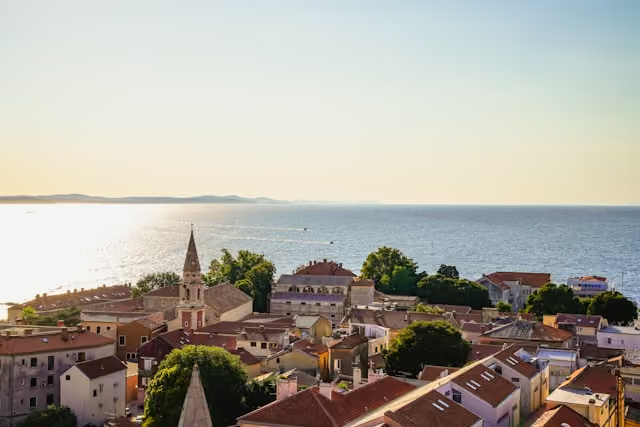
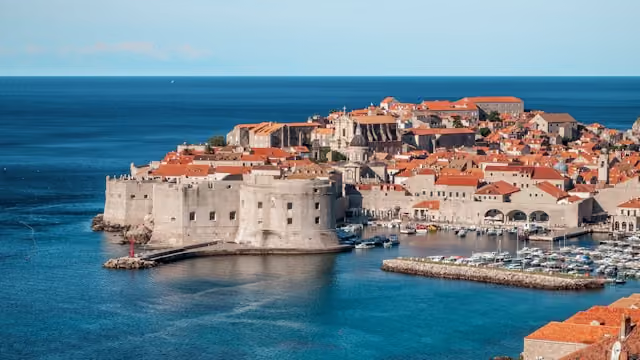
Yes, tap water is safe across Croatia's major coastal cities including Split, Dubrovnik and Zadar, all of which meet EU standards, though some smaller islands can vary.
We don't conduct independent water testing. We summarise and interpret publicly available official data. Conditions can change rapidly — always verify with local authorities before travelling.
Explore more destinationsCroatia
📚 Official Resources & Further Reading
World Health Organization (WHO) – Drinking Water Safety Guidelines
Centers for Disease Control and Prevention (CDC) – Travel Health Advice
Australian Government – Smartraveller

.svg)
