

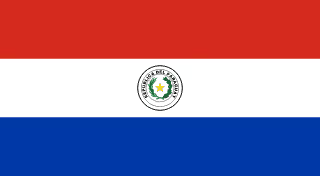
Can You Drink Tap Water in Paraguay?
Tap water in Paraguay is not safe to drink. Water treatment infrastructure is limited and contamination is common.
Complete Drinking Water Safety Information for Paraguay
Tap water in Paraguay is unsafe for drinking and should be avoided by tourists throughout the country including Asunción, Ciudad del Este, and Encarnación. Water treatment infrastructure is limited and distribution systems are compromised by aging pipes, contamination, and inadequate maintenance. Most Paraguayans do not drink tap water and rely on bottled water, filtered water, or boiled water. In Asunción, the capital, water is treated by ESSAP (Empresa de Servicios Sanitarios del Paraguay) but quality is inconsistent and contamination is common.
Infrastructure challenges include intermittent water supply with many neighborhoods receiving water only certain hours or days. When pipes are empty, contamination can enter the system. Hotels in tourist areas provide bottled or filtered water, but tap water should not be consumed. In Ciudad del Este, Paraguay's second-largest city on the border with Brazil and Argentina, water infrastructure is poor and tap water is consistently unsafe despite the city's commercial importance.
The Iguazú Falls area on the Paraguayan side has limited water treatment. In Encarnación on the border with Argentina, water treatment exists but is unreliable. Tourists should use bottled water throughout their stay. The Chaco region and rural areas of Paraguay have minimal or no water treatment infrastructure.
Indigenous communities and remote areas rely on untreated wells or rivers. Paraguay experiences waterborne disease outbreaks including typhoid, hepatitis A, and traveler's diarrhea. Contamination risks increase during rainy season when flooding can overwhelm limited sewage systems. The country's water infrastructure lags behind neighboring Argentina, Brazil, and Uruguay.
Use bottled water for all drinking, brushing teeth, and washing produce. Most restaurants in Asunción use filtered water for drinks and ice, but verify in smaller establishments.
Bottled Water information in Paraguay

Bottled water is affordable (PYG 2,000-5,000 or USD $0.30-$0.70 per liter) and available at supermarkets, despensas (small shops), gas stations, and street vendors throughout Paraguay. Popular brands include Nativa and Ybytyruzú. Essential for your entire trip.
Is ice safe in Paraguay?
Ice safety varies. Ice in upscale hotels and established restaurants in Asunción may be made from filtered water and considered relatively safe. Ice in local restaurants, street vendors, and outside the capital is typically made from tap water and should be avoided.
Can you use a water filter in Paraguay?
High-quality water filters are common in Paraguayan households. For travelers, portable filters provide backup safety but bottled water should be your primary source. Filters must remove bacteria, viruses, and protozoa.
Should you boil tap water in Paraguay?
Yes. If bottled water is unavailable, boiling tap water for at least one minute is essential. Many Paraguayan households boil water before consumption. However, bottled water is widely available and more convenient for travelers.
Popular destinations inParaguay
Questions!
Can you drink tap water in Asunción?
No. Tap water in Asunción is treated but not safe to drink due to aging infrastructure and contamination risks during distribution. Bottled water is widely available.
Is tap water safe outside Asunción in rural Paraguay?
No. Water quality in rural Paraguay is very inconsistent. Many communities rely on wells or rivers with minimal or no treatment. Bottled water is essential outside the capital.
We don't conduct independent water testing. We summarises and interpret publicly available official data. Conditions can change rapidly — always verify with local authorities before travelling.
Explore all popular destinations inParaguay
Explore more countries in South America
Water safety guides for South American countries covering the entire continent from Colombia to Argentina.


📚 Official Resources & Further Reading
World Health Organization – Paraguay Water Access
CDC – Paraguay Travel Information
Paraguay Ministry of Public Health
Pan American Health Organization – Paraguay
U.S. Department of State – Paraguay Travel Information

.svg)
