

Can You Drink Tap Water in Mykonos?
Complete Drinking Water Safety Information for Mykonos
Mykonos has no natural freshwater sources capable of supplying a modern population and tourist economy — the island is rocky, arid, and receives limited rainfall, particularly during the dry summer months of June through September when its population swells from approximately 10,000 permanent residents to well over 100,000 with tourists and seasonal workers. The island's water supply is managed by DEYA Mykonos (the Municipal Water Supply and Sewerage Company of Mykonos), which relies on a combination of seawater desalination using reverse osmosis and water imported by tanker ships from the Greek mainland. This supply model — shared by many of the smaller Cycladic islands — means water infrastructure is under constant seasonal pressure and the water that reaches taps has a characteristic flat, mineral-free profile typical of desalinated sources.
Tap water in Mykonos is not recommended for drinking. While DEYA Mykonos treats and distributes water that is technically functional for bathing and household use, it is not considered suitable for direct consumption by visitors or by most island residents. The desalinated character of the water — stripped of natural minerals during the reverse osmosis process and sometimes supplemented with tanker water of variable origin — means it lacks the mineral balance expected of drinking water and can have a noticeably flat or slightly metallic taste. Distribution through the island's older pipe network, much of which dates from earlier infrastructure investment periods, can further affect quality at the point of delivery.
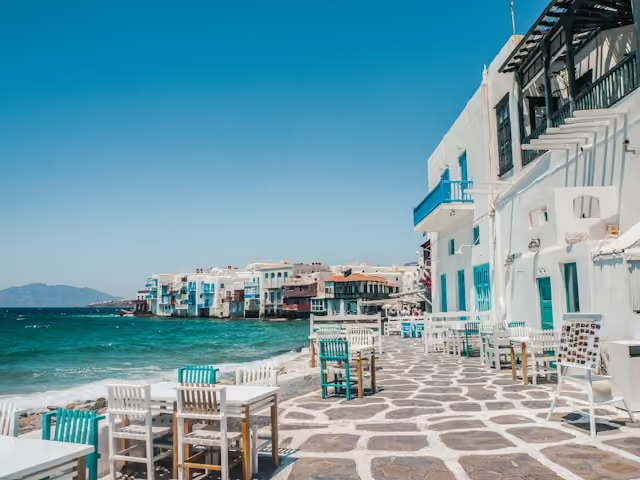
In Mykonos Town (Chora), the whitewashed village, Little Venice, and the windmills area are all supplied via the DEYA network from the island's central desalination and storage facilities. Hotels, boutique properties, and luxury villas throughout Mykonos Town, Ornos, Agios Ioannis, Psarou, and the southern beach areas all provide sealed bottled water for guests as the drinking standard. No hotel or resort on Mykonos recommends tap water for consumption. Visitors should treat tap water at any Mykonos accommodation — from budget studios in Mykonos Town to five-star properties on Psarou beach — as suitable for bathing only.
The high season pressure on Mykonos's water system — July and August in particular — can lead to supply interruptions and increased reliance on tanker imports, which introduces additional variability in consistency and quality. Some luxury villas and hotels on the island install their own reverse osmosis or UV filtration systems as a secondary quality measure, and some provide refillable water dispensers in rooms as a plastic-reduction measure — these are safe to drink from where explicitly provided as potable by the property. Always confirm with your accommodation before drinking from any internal filtered source.
For visits to Mykonos's beaches — Paradise, Super Paradise, Elia, Agari, Panormos, and Ftelia — carrying sufficient sealed bottled water is essential, particularly during summer when temperatures regularly exceed 30°C and dehydration risk is significant. Beach clubs along the southern coast stock bottled water but at premium prices. Buying large-format bottles at a supermarket in Mykonos Town before heading to beach areas is the most practical and cost-effective approach for a full day out on the island.
Bottled Water Information
Bottled water is widely available across Mykonos, though at notably higher prices than mainland Greece due to the island's import logistics. Zagori, Loutraki, and Avra are the most commonly available Greek still mineral water brands, stocked at supermarkets in Mykonos Town and at hotel and resort minimarkets. A 1.5-litre bottle costs approximately €1.50–€3.00 at supermarkets, rising to €4–€8 at beach clubs and hotel bars in Paradise Beach, Super Paradise, and Psarou areas. Buying larger-format bottles at the Alpha Beta or AB Vassilopoulos supermarket in Mykonos Town is the most economical approach for day-to-day hydration during your visit.
Is Ice Safe in Mykonos?
Ice safety in Mykonos requires some caution. At established hotels and beach clubs — including the major venues at Paradise Beach, Psarou, and Ornos — ice is produced from commercially purified or imported water and is safe. At smaller tavernas, local cafes, and less established venues in Mykonos Town's backstreets, ice quality is less certain. The practical rule on Mykonos is the same as Santorini: established tourist-facing venues — safe; small local establishments — caution advised.
Should You Use a Water Filter in Mykonos?
A water filter is of limited practical value for most Mykonos visitors staying at hotels and resorts where bottled water is provided. For villa stays or self-catering apartments where bottled water supply may require self-management, a portable filter such as a GRAYL UltraPress or a countertop filter provides a useful backup. Some higher-end Mykonos villas install undersink reverse osmosis systems — where these are explicitly provided as potable by the property owner, they are safe to use. Always confirm before drinking from any internal filter system at self-catering accommodation.
Should You Boil Tap Water in Mykonos?
Boiling Mykonos tap water is not necessary from a biological contamination standpoint — the desalinated supply is not inherently unsafe in that sense. However, boiling does not improve the flat, mineral-deficient taste of desalinated water, does not address any chemical residues from aging pipes, and is impractical given the universal availability of bottled water across the island. Bottled water is the appropriate and universal solution for all visitors.
Questions!
Is tap water safe to drink in Mykonos?
No. Tap water in Mykonos is not recommended for drinking. The island relies on desalinated seawater and tanker imports managed by DEYA Mykonos, and the water is not considered suitable for direct consumption. All hotels and resorts provide sealed bottled water as the drinking standard. Use bottled water for all drinking and tooth brushing throughout your stay.
Why is Mykonos tap water not safe to drink?
Mykonos has no natural freshwater sources and relies entirely on seawater desalination and mainland tanker imports. The desalinated water lacks natural mineral balance and can be affected by aging pipe infrastructure between storage and delivery. Seasonal demand pressure during peak summer months further strains the supply system.
Is ice safe in Mykonos restaurants and beach clubs?
At established hotels, beach clubs, and restaurants in Mykonos Town, Ornos, and Psarou, ice is generally safe — these venues use commercially purified or imported water for ice production. At smaller local cafes and tavernas, ice quality is less certain. When in doubt, request drinks without ice.
What bottled water brands are available in Mykonos?
Zagori, Loutraki, and Avra are the most commonly available Greek still mineral water brands on the island. A 1.5-litre bottle costs approximately €1.50–€3.00 at supermarkets in Mykonos Town, rising significantly at beach clubs and hotel bars. Buy larger bottles at a supermarket before heading to beach areas.
Does Mykonos have enough water for tourists?
Water supply on Mykonos is under significant pressure during peak season (July–August) when the island's population increases tenfold. DEYA Mykonos supplements desalination with tanker imports during high demand periods. Supply interruptions can occur. Always keep a stock of sealed bottled water at your accommodation.
We don't conduct independent water testing. We summarise and interpret publicly available official data. Conditions can change rapidly — always verify with local authorities before travelling.
Explore more destinationsGreece
📚 Official Resources & Further Reading
World Health Organization (WHO) – Drinking Water Safety Guidelines
Centers for Disease Control and Prevention (CDC) – Greece Travel Health Advice
Australian Government – Smartraveller Greece

.svg)
