

Can You Drink Tap Water in Ho Chi Minh City?
Complete Drinking Water Safety Information for Ho Chi Minh City
Tap water in Ho Chi Minh City is not safe to drink and this applies throughout the entire metropolitan area — District 1 (Bến Nghé), District 3, Bình Thạnh, Thảo Điền, Phú Mỹ Hưng, and the outer districts. Water supply is managed by Sawaco (Saigon Water Corporation), which operates treatment plants at Thủ Đức, Bình An, and Tân Hiệp drawing from the Đồng Nai River and Sài Gòn River. Sawaco applies conventional treatment including coagulation, sedimentation, sand filtration, and chlorination, and the water meets Vietnamese national drinking water standards at the point of leaving the treatment plant. However, the distribution infrastructure is the critical problem — the pipe network across Ho Chi Minh City's sprawling urban area is extensive, aging in many sections, and subject to cross-contamination, leakage, and post-treatment bacterial regrowth before water reaches any tap.
The Đồng Nai and Sài Gòn rivers — Ho Chi Minh City's two primary source rivers — carry significant industrial, agricultural, and domestic pollution loads from upstream areas. While Sawaco's treatment plants are designed to handle these inputs, the volume and variability of pollution in these river systems — particularly during monsoon season (May–November) when runoff increases dramatically — places the treatment system under sustained pressure. Heavy rainfall events can overwhelm treatment capacity, and the chlorination applied to manage post-treatment bacterial risk sometimes produces elevated disinfection byproducts in the network. Vietnamese national standards for these byproducts are less stringent than WHO guidelines.
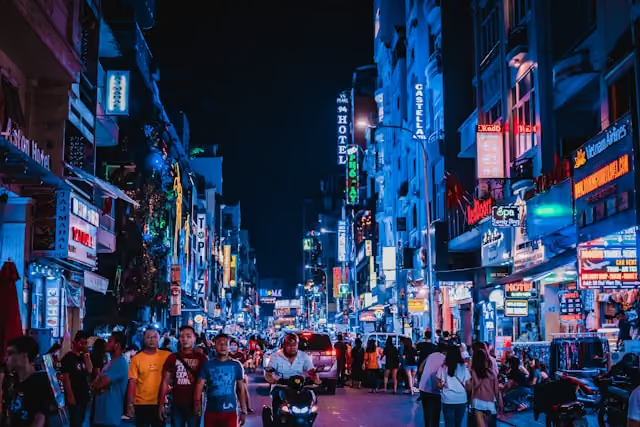
For visitors, the practical picture is straightforward: no resident of Ho Chi Minh City drinks tap water directly, and no hotel, restaurant, or guest accommodation presents tap water as a drinking option. Hotels throughout District 1's Bui Vien backpacker strip, the luxury properties along Dong Khoi Street, and the international-standard apartments in Thao Dien all provide sealed bottled water for guests. Expat residents in Thao Dien, Binh Thanh, and Phu My Hung rely on large-format 19-litre water dispenser deliveries from brands including La Vie, Aquafina, and local Lavie alternatives. Drinking tap water in Ho Chi Minh City is not a practice observed by any demographic of the city's population.
Ice safety in Ho Chi Minh City is a nuanced topic. The city's mainstream restaurant, hotel, and established cafe sector uses commercially produced tubular ice made from purified water — identifiable by its cylindrical hollow shape and available from regulated ice factories throughout the city. This commercial ice is safe at all established venues. Street food stalls, local com tam (broken rice) restaurants, and informal vendors on tourist streets including Bui Vien may use lower-quality ice. The general guideline for Ho Chi Minh City is consistent with wider Vietnam: established venues — safe; street vendors and informal stalls — use caution.
For visitors exploring Ho Chi Minh City's neighbourhoods — Ben Thanh Market, the backpacker hub on Bui Vien, the War Remnants Museum area, the cu chi tunnels day trip, or the Mekong Delta — carrying sealed bottled water is essential given the heat and humidity. Average temperatures throughout the year exceed 30°C, rising to 35°C+ during the dry season hot months of March–May, and adequate hydration from safe sealed sources is important. La Vie, Aquafina, and Dasani are available at Circle K, GS25, FamilyMart, and Vinmart outlets throughout all tourist areas of the city.
Bottled Water Information
Bottled water is universally available throughout Ho Chi Minh City at extremely low cost. La Vie, produced by Nestlé Vietnam and sourced from Da Lat mountain springs, is the premium Vietnamese bottled water brand and the most widely available at supermarkets, convenience stores, and restaurants citywide. Aquafina (PepsiCo Vietnam), Dasani (Coca-Cola Vietnam), and Vĩnh Hảo (a natural sparkling mineral water from Binh Thuan province) are also widely available. A 500ml bottle costs approximately VND 5,000–10,000 (around AUD $0.30–$0.60) at Circle K, GS25, FamilyMart, and VinMart convenience stores throughout Districts 1, 3, Binh Thanh, and Thảo Điền. Large 19-litre water dispenser deliveries are standard in Ho Chi Minh City homes and offices.
Is Ice Safe in Ho Chi Minh City?
Ice in Ho Chi Minh City requires consistent awareness. Established restaurants, hotels, rooftop bars, and international-standard cafes throughout Districts 1 and 3, Bình Thạnh, and Thảo Điền use commercially produced tubular ice from regulated ice factories — this ice is made from purified water and is safe. The commercial tubular ice is identifiable by its hollow cylindrical shape and consistent sizing. Street food stalls, informal vendors on Bùi Viện, and local cơm tấm restaurants may use lower-grade ice of uncertain origin. The practical guideline: established venues — safe; street stalls and informal vendors — exercise caution.
Should You Use a Water Filter in Ho Chi Minh City?
A water filter is a practical addition for longer stays in Ho Chi Minh City. Many expatriate residents in Thảo Điền, Bình Thạnh, and Phú Mỹ Hưng use countertop reverse osmosis or UV filtration systems as a complement to the 19-litre dispenser delivery system. For short-stay visitors, sealed bottled water is the more convenient and reliable solution. Portable filter bottles such as the GRAYL UltraPress are effective against the biological contamination profile of Ho Chi Minh City's tap water and useful for travellers continuing into rural southern Vietnam where bottled water availability may be more limited.
Should You Boil Tap Water in Ho Chi Minh City?
Boiling Ho Chi Minh City tap water at a rolling boil for one minute kills biological contaminants including bacteria and protozoa, but does not remove heavy metals, chemical residues, or the turbidity introduced by aging pipes. Given the universal availability of bottled water throughout the city at very low cost, boiling is not a practical necessity for short-stay visitors. Long-term residents who boil tap water typically combine it with filtration for a more complete solution.
Questions!
Is tap water safe to drink in Ho Chi Minh City?
No. Tap water in Ho Chi Minh City is not safe to drink despite treatment by Sawaco. Aging pipe infrastructure and post-treatment contamination mean the water does not meet international drinking standards at the tap. No resident or visitor drinks tap water directly — use only sealed bottled water for all drinking and tooth brushing throughout your stay.
Is ice safe in Ho Chi Minh City restaurants and cafes?
At established restaurants, hotels, and cafes in Districts 1, 3, and Binh Thanh, ice is generally safe — these venues use commercially produced tubular ice made from purified water. At street food stalls and informal vendors, ice quality is less certain. The commercial tubular ice (hollow cylindrical shape) is the reliable indicator of purified-source ice in Vietnam.
What is the best bottled water brand in Ho Chi Minh City?
La Vie, produced by Nestlé Vietnam from Da Lat mountain springs, is the premium Vietnamese bottled water brand and most widely available citywide. Aquafina (PepsiCo Vietnam) and Dasani (Coca-Cola Vietnam) are also reliable. A 500ml bottle costs approximately VND 5,000–10,000 at Circle K, GS25, and FamilyMart convenience stores throughout tourist areas.
Is the water safe at hotels in Ho Chi Minh City?
No hotel in Ho Chi Minh City presents tap water as a drinking option. All accommodation from budget guesthouses on Bui Vien to five-star properties on Dong Khoi Street provides sealed bottled water for guests. Use the provided bottled water or purchase additional bottles — do not drink from room taps under any circumstances.
Is water safe during the Mekong Delta day trip from Ho Chi Minh City?
No. Water safety concerns are consistent throughout southern Vietnam. On Mekong Delta tours, rely exclusively on the sealed bottled water provided by your tour operator or purchased from shops in Can Tho or My Tho. Do not drink from any local tap or well water source encountered during rural excursions.
We don't conduct independent water testing. We summarise and interpret publicly available official data. Conditions can change rapidly — always verify with local authorities before travelling.
Explore more destinationsVietnam
📚 Official Resources & Further Reading
World Health Organization (WHO) – Drinking Water Safety Guidelines
Centers for Disease Control and Prevention (CDC) – Vietnam Travel Health Advice
Australian Government – Smartraveller Vietnam

.svg)
